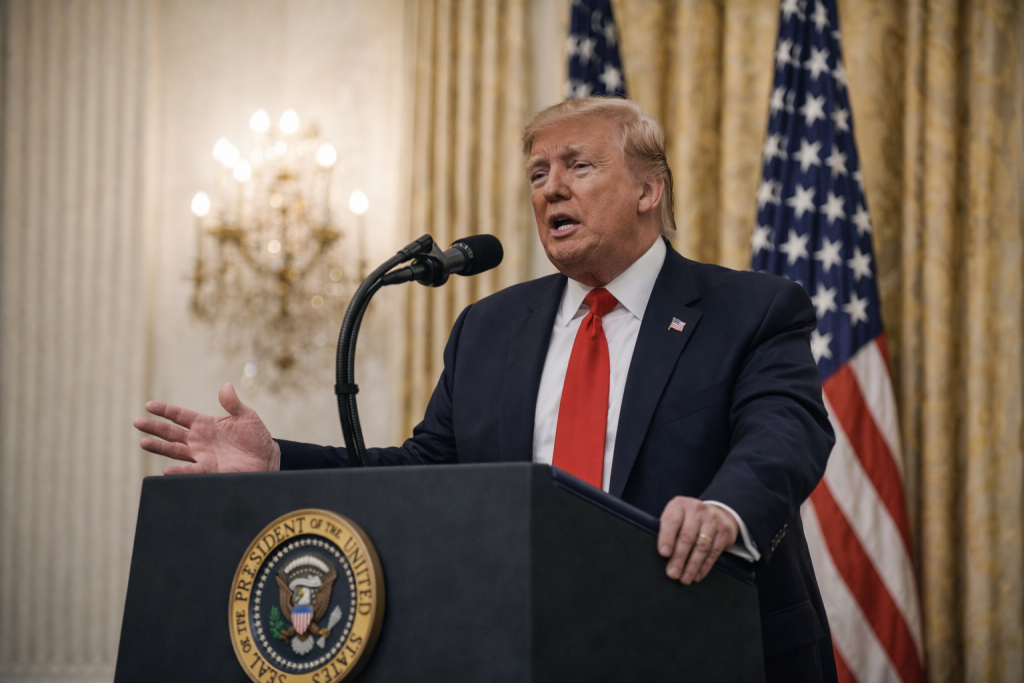
The dollar rose on Thursday after US President Donald Trump described Iran as acting “crazy,” tempering expectations for a swift ceasefire that had briefly erased a two-day slide in the currency.
The dollar index climbed to a session high of 99.925 before closing 0.3% stronger at 99.86, having earlier touched a three-week low as investors briefly priced in the prospect of a near-term end to the conflict.
Market moves after Trump’s Iran remarks
Trump said the conflict was “coming to an end” but warned that US air strikes would continue for a further two to three weeks.
Markets took the comments as a signal that the war would escalate before it de-escalates, prompting a swift reversal in risk sentiment.
The euro and sterling each fell around 0.3% against the dollar.
The Australian dollar dropped roughly 0.6% to $0.6887 and the New Zealand dollar declined a similar amount to $0.5719.
The Japanese yen slid to 159.25 per dollar, remaining below the 160 level that many traders regard as a potential trigger for intervention by Japanese authorities.
Why the greenback is in demand?
The dollar initially sold off earlier in the week after early ceasefire signals briefly lifted risk appetite, but Trump’s subsequent comments reversed that move.
Commonwealth Bank of Australia strategist Carol Kong said markets are “starting to realise” that the conflict will “escalate first before it de-escalates,” a dynamic that supports demand for the dollar as a safe-haven currency.
A Goldman Sachs director said the dollar may continue to appreciate against the euro and yen as investors price in a broader slowdown in global economic growth.
Jobs data and Fed policy in focus
Attention is turning to the March non-farm payrolls report, with market consensus pointing to 60,000 jobs added, according to a Reuters poll.
Even a weaker reading is unlikely to be sufficient to keep Federal Reserve rate cuts firmly on the table, given that sharply higher oil prices are expected to weigh on consumer spending and put upward pressure on inflation.
Fed meeting minutes are due for release this week ahead of the payrolls data.
Futures positioning suggests traders are repositioning for a prolonged Middle East conflict, a stronger dollar, and a data calendar that may make it difficult for the Fed to ease policy at its next meeting. The S&P 500 fell 1.1% over the week.
Outlook: risk tilted towards the dollar
The dollar is likely to remain sensitive to any developments in the Middle East, with safe-haven demand providing a floor so long as the conflict shows no clear sign of resolution.
In the near term, the combination of geopolitical uncertainty and a heavy schedule of US data releases keeps the balance of risk tilted in favour of the greenback.
The post Dollar rises on safe-haven demand after Trump warns Iran still a risk appeared first on Invezz